

Autologous Protein Solution (APS) Injection Therapy


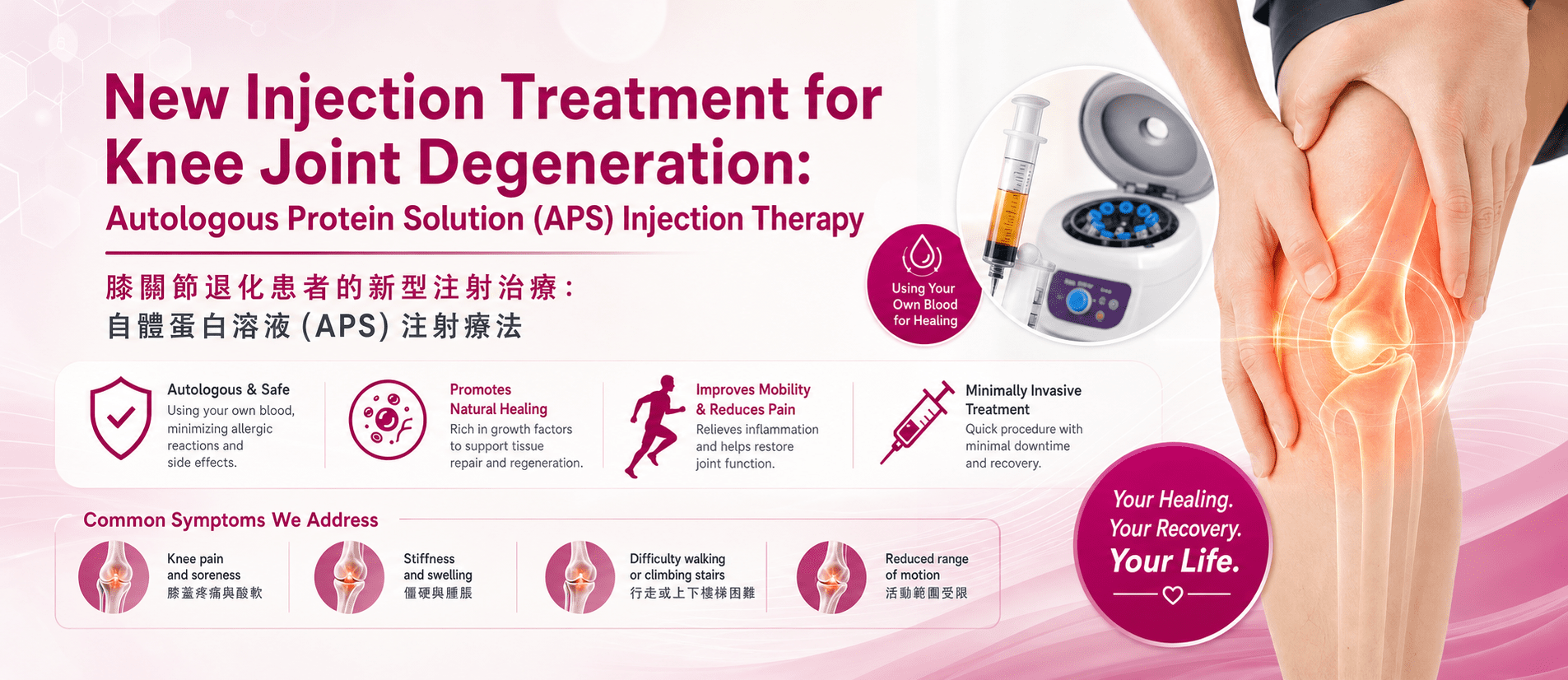
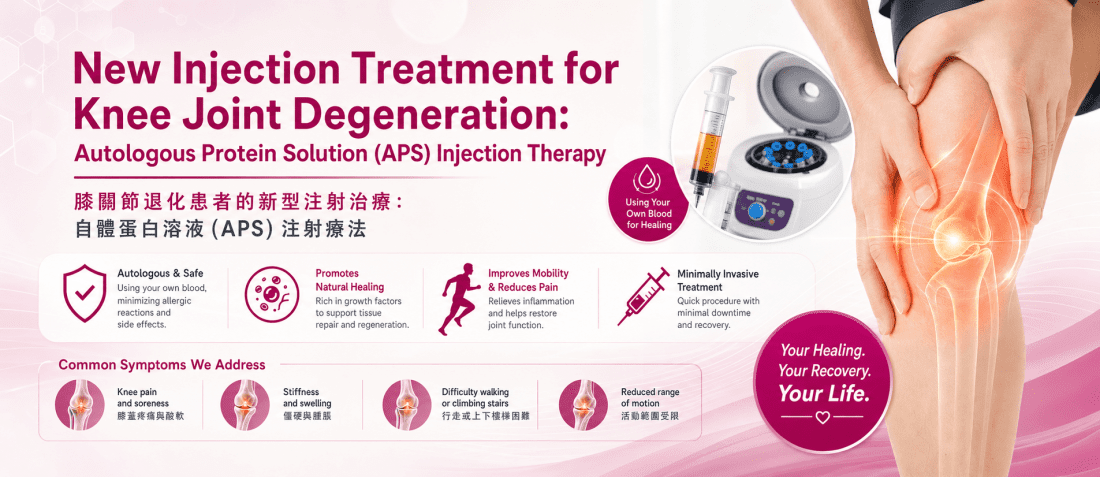
The knee is a common site for degenerative joint changes. Patients with degenerative knee arthritis often experience pain, occasional swelling and warmth—symptoms that are frequently worse after activity. For early to moderate disease, non surgical options such as intra articular injections may be considered. In addition to PRP, Autologous Protein Solution (APS) is another autologous blood derived approach aimed at enriching specific anti inflammatory proteins.
How it works
Joints contain both anti inflammatory and pro inflammatory proteins. APS preparations are designed to increase the relative concentration of anti inflammatory cytokines and protective proteins, with the aim of modulating the intra articular environment to reduce inflammation and support tissue preservation. APS products are derived from the patient’s blood, but specific formulations and processing steps vary by system.
Preparation and procedure
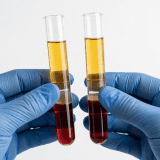
APS preparation typically begins with a blood draw (volume depends on protocol). The sample is processed with separation and concentration steps to yield a small volume of protein enriched solution. Some reported protocols draw around 60 ml and yield a few milliliters of APS, but actual volumes and composition depend on the device and method used. The solution is injected into the joint under aseptic conditions and often with image guidance.
Indications
APS is proposed for symptomatic degenerative joint disease—particularly early to moderate osteoarthritis—where modulation of intra articular inflammation is a treatment objective. Clinical use varies across centres and systems.
Potential benefits
May reduce joint inflammation and pain for some patients.
Aims to protect cartilage and support joint tissue homeostasis by altering intra articular protein balance.
Uses autologous material, so systemic immune reactions are unlikely.
Risks and side effects
As an autologous therapy, systemic adverse events are uncommon. Injection related discomfort, local swelling, bruising and rarely infection may occur. Pre treatment screening for active infection, significant hematologic conditions, and medications that affect coagulation is recommended. Discuss contraindications and specific risks with our medical team.
Post procedure care
Patients are typically observed briefly and can go home the same day. Short term rest and staged return to activity under clinician guidance are advised. Ice and analgesics can be used for transient discomfort. Follow the post procedure instructions provided by our medical staff.
Treatment course
Protocols differ: some clinicians perform a single APS injection, others give multiple injections at intervals. The treating team will recommend a schedule based on the individual’s condition and response.



Consultant In Orthopaedics & Traumatology

FHKCOS
FHKAM (Orthopaedic Surgery)
FRCSEd (Orth)
MRCSEd
Clinical Director Of Robotic Surgery (Joint Replacement) (HKAH-SR)

MRCSEd
FRCSEd (Orth)
FHKCOS
FHKAM (Orthopaedic Surgery)
Robotic Surgery (Joint Replacement)

MRCSEd
FRCSEd (Orth)
FHKCOS
FHKAM (Orthopaedic Surgery)

Consultant In Orthopaedics & Traumatology

DFM (HKCFP)
DCH (Irel)
MRCSEd
FRCSEd(Orth)
FHKAM (Orthopaedic Surgery)
FHKCOS

FRCSEd
FCSHK
FHKCOS
FHKAM (Orthopaedic Surgery)
FRACS
Consultant In Orthopaedics & Traumatology

FRCSEd (Orth)
FHKCOS
FHKAM (Orthopaedic Surgery)

MRCSEd
FRCSEd (Orth)
FHKCOS
FHKAM (Orthopaedic Surgery)
Robotic Surgery (Joint Replacement)

MRCSEd
FRCSEd (Orth)
FHKCOS
FHKAM (Orthopaedic Surgery)
Spine Surgery

M Med Sc (HK)
FRCSEd(Orth)
FHKCOS
FHKAM (Orthopaedic Surgery)


.png)