
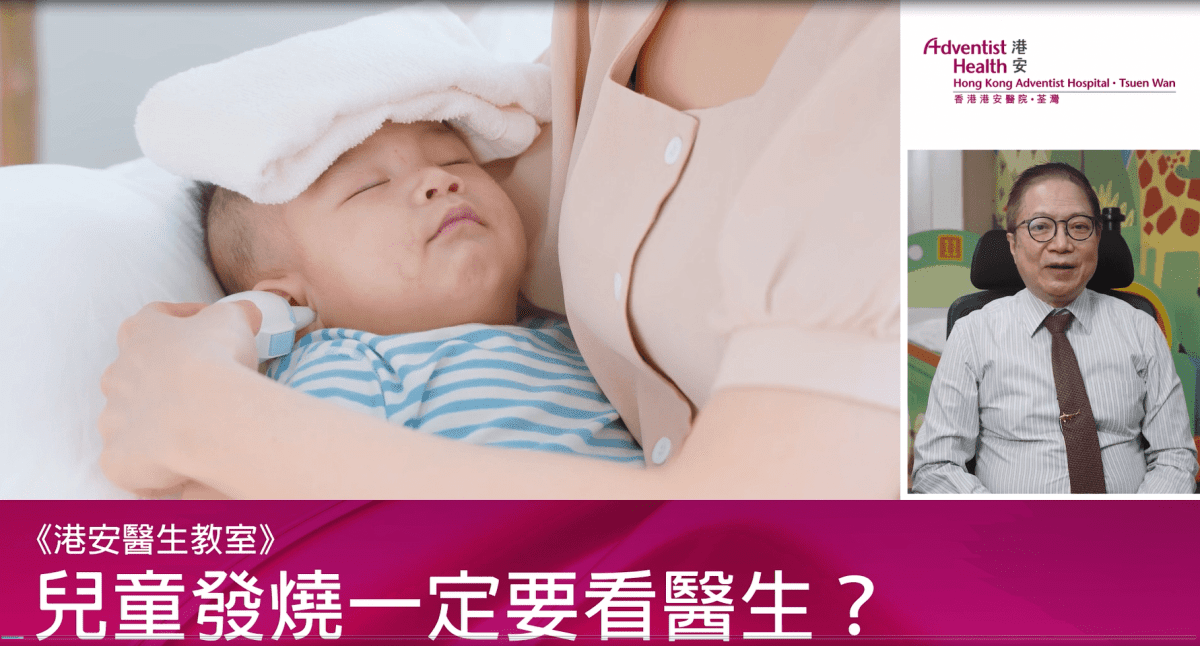
Adventist Health Education Series — Don’t Panic When Your Child Has a Fever! Must-Know Observation and Cooling Steps for Parents
When a child has a fever, it’s natural for parents to feel anxious and seek medical help. However, fever itself is not a disease, but rather a response of the body to infection, most commonly caused by viral infections. Since children with fever often appear tired and have poor appetite, it can easily cause concern for parents.
A rectal temperature above 38°C is considered a fever. For newborns in the first two months, it is recommended to use a rectal or underarm thermometer, as forehead thermometers may be less accurate.
Babies under three months old have immature immune systems and weaker resistance, so if they develop a fever, they should be taken to a doctor immediately. Older children who experience persistent high fever along with symptoms such as seizures, vomiting, diarrhea, difficulty breathing, rash, lethargy, refusal to drink water, or decreased urination should also seek medical attention promptly.
For older children with stable conditions, parents can first apply physical cooling methods: ensure good ventilation indoors, maintain room temperature at 24–25°C, and dress the child in lightweight, loose, and breathable clothing. Fever-reducing medications like paracetamol or ibuprofen can be given under a doctor’s instruction, but mixing medications on your own should be strictly avoided.
Fever does not necessarily mean serious illness, but parents must be able to recognize warning signs and seek medical help when necessary.





.png)